
Keynote Lectures
Reconsidering Area Studies from the Perspectives of Evolution and War

2026 5.15
[ Fri ]
14:10~16:30
Venue: Hotel Metropolitan Sendai 4th Floor
Area Studies and Foreign Policy Research:
A Perspective from the History of East Asian International Relations
In recent years, the international order has been significantly shaken. The rise of China, Russia’s actions, and the transformation of the United States—once regarded as the leading representative of the advanced industrial democracies—form part of this background. At the same time, regional powers often described as “emerging countries” are playing increasingly important roles in international politics and attracting attention as actors that conduct foreign policy. Yet it is far from easy to determine how best to conceptualize and analyze them.
How, then, can area studies—particularly of non-advanced regions such as Asia, which have traditionally focused on rural communities and socio-economic structures—approach the study of foreign policy? To be sure, non-advanced countries have long been included in foreign policy research. However, much of this work has examined them primarily from the perspective of economic cooperation and “development.” In the fields of international politics and diplomatic studies, research has largely centered on advanced countries and great powers, while non-advanced countries have seldom been treated as principal actors. Methodologically as well, approaches developed in the study of advanced countries’ diplomacy have generally been applied. Even in the field of diplomatic history—sometimes considered “outdated” in advanced countries—research may focus on specific states such as China or Turkey, but the limited availability of diplomatic archives continues to constrain in-depth study of many non-advanced countries.
How can these challenges be overcome? First, it is necessary to position the countries under study as active subjects in their own right and to conduct research with them as the grammatical and analytical “subject.” Second, analysis should build upon the achievements of area studies, incorporating attention to regional socio-economic structures as well as historically significant ideas and intellectual traditions. In other words, foreign policy research must be grounded in, and attentive to, the specific regional contexts from which it emerges.
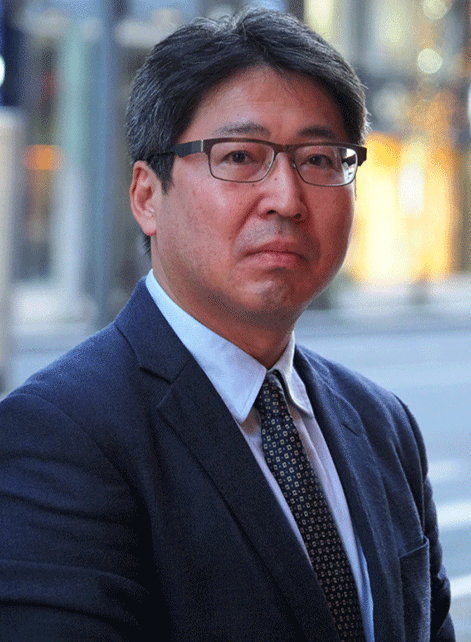

Shin KAWASHIMA
Professor, Graduate School of Arts and Sciences, The University of Tokyo
Biography
Professor, Graduate School of Arts and Sciences, The University of Tokyo.
Specialist in East Asian international relations history and the political and diplomatic history of China and Taiwan. Professor Kawashima’s research focuses on the modern and contemporary history of Chinese diplomacy and Sino-Japanese relations. He explores the formation and transformation of the international order in East Asia—particularly in relation to China, Taiwan, and Japan—by integrating historical inquiry with contemporary political analysis. His work combines empirical and theoretical approaches to issues such as China’s perceptions of foreign relations, nationalism, the Taiwan issue, and broader themes of sovereignty, memory, and historical consciousness in postwar East Asia.
In addition to his academic work, he actively engages in public discourse on current developments in China and Taiwan through television appearances, newspaper commentary, and policy discussions, providing important insights into international politics in East Asia.
Major publications including followings:
Kawashima, Shin. “War and Order from the Perspective of the Global South.” Gaikō, no. 93, September 2025 (川島真「グローバルサウスから見た戦争と秩序」(『外交』93号、2025年9月、https://www.mofa.go.jp/mofaj/press/pr/gaikou/vol93.html)).
Kawashima, Shin, Ayame Suzuki, and Yu Koizumi, eds. Eurasia’s Self-Portrait: Blind Spots in the Discourse on U.S.–China Rivalry and the ‘New Cold War’. Tokyo: PHP Institute, 2023. (Supervised by Satoshi Ikeuchi) (川島真·鈴木絢女·小泉悠編著、池内恵監修『ユーラシアの自画像―「米中対立/新冷戦」論の死角』PHP、2023 年).
Kawashima, Shin, Mitsugi Endo, Akio Takahara, and Yasuhiro Matsuda, eds. China’s Diplomatic Strategy and the World Order: Ideas, Policies, and Local Perspectives. Kyoto: Shōwadō, 2019 (川島真・遠藤貢・高原明生・松田康博編著『中国の外交戦略と世界秩序──理念・政策・現地の視線』昭和堂、2019年).
Two Sides to Conflict: What deep Eurasian history and contemporary Africa reveal about the evolution of social order
Conflict has been a recurrent feature of human societies from deep time to the present day. Although its extent, intensity, and institutional form have varied enormously across regions and historical periods, conflict is often associated with severe negative outcomes, including loss of life, displacement, resource depletion, and the erosion of trust and cooperation. Yet a long tradition of research in anthropology, history, and political economy has argued that conflict can also play a paradoxical role in shaping social and political organization. Scholars of collective action have suggested that external threats may foster internal cooperation, and as states expand they often attempt to reduce conflict within their boundaries. In this talk, I explore these dual perspectives through two contrasting empirical lenses. First, I draw on large-scale comparative analyses spanning roughly 3,000 years of Eurasian history to test hypotheses about how conflict, alongside other factors, has contributed to the development of institutions and cultural traits that facilitated the emergence, spread, and persistence of large-scale complex societies. I then turn to contemporary pastoralist societies in Kenya, where inter-group conflict over access to natural resources is undermining collective action. Drawing on ongoing field-based and quantitative research, I show how conflict in this context erodes trust, fragments governance, and constrains efforts to manage shared rangelands sustainably. Bringing these cases together, I argue that insights from the long-run evolution of social order, combined with an appreciation of local cultural and ecological conditions, can inform present-day efforts to improve collective action in these groups. I conclude by discussing how ongoing and future research is exploring how this perspective can help local communities design equitable and inclusive institutions that improve coordination across groups and enable them to manage common resources and natural environments more sustainably.

Thomas E. Currie
Professor, University of Exeter
Biography
Thomas E. Currie specializes in cultural evolution and human behavioral ecology. He received his Ph.D. in Anthropology from University College London (UCL), where he conducted cross-cultural comparative research on political organization. He worked as a postdoctoral researcher at the University of Tokyo and UCL, he joined the University of Exeter. He is currently Professor at the Centre for Ecology and Conservation Biosciences, University of Exeter. His research has focused on large-scale comparative analyses of the evolution of social complexity from an evolutionary perspective, such as the emergence of social institutions, cooperative behavior, and social inequality. An example includes the role of warfare in the long-term development of socio-political complexity across Eurasia. Recently, he has also engaged in field research on the resilience of pastoral societies under environmental change. By integrating macro-scale comparative research with fieldwork, he is leading investigations on human social and cultural diversity. His major publications include: Currie, T. E., Greenhill, S. J., … & Mace, R. (2010). Rise and fall of political complexity in island South-East Asia and the Pacific. Nature, 467(7317), 801–804; Turchin, P., Currie, T. E., Turner, E. A., & Gavrilets, S. (2013). War, space, and the evolution of Old World complex societies. Proceedings of the National Academy of Sciences of the USA, 110(41), 16384–16389; and Currie, T. E., Borgerhoff Mulder, M., … & Waring, T. M. (2024). *Integrating evolutionary theory and social–ecological systems research to address the sustainability challenges of the Anthropocene. Philosophical Transactions of the Royal Society B: Biological Sciences, 379(1893).
(Until April 26th (Sun))